
Trademarks have long been associated with logos, brand names, and slogans. However, in today’s competitive market, brands are increasingly seeking to protect non-traditional trademarks—distinctive elements such as colors, shapes, sounds, and even scents that identify and differentiate their products or services. These non-traditional marks offer businesses new ways to reinforce brand identity and enhance consumer recognition.
Non-traditional trademarks include distinctive features beyond words or conventional logos. Common examples are:
Such trademarks can be particularly valuable in markets where visual differentiation alone is insufficient to create brand recognition.
Guatemala allows the registration of non-traditional trademarks, provided they meet the standard requirements of distinctiveness and the ability to identify the source of goods or services. While the process is similar to conventional trademarks, applicants must provide clear evidence that the mark is distinctive and capable of being represented graphically, which can be more challenging for colors, sounds, or scents.
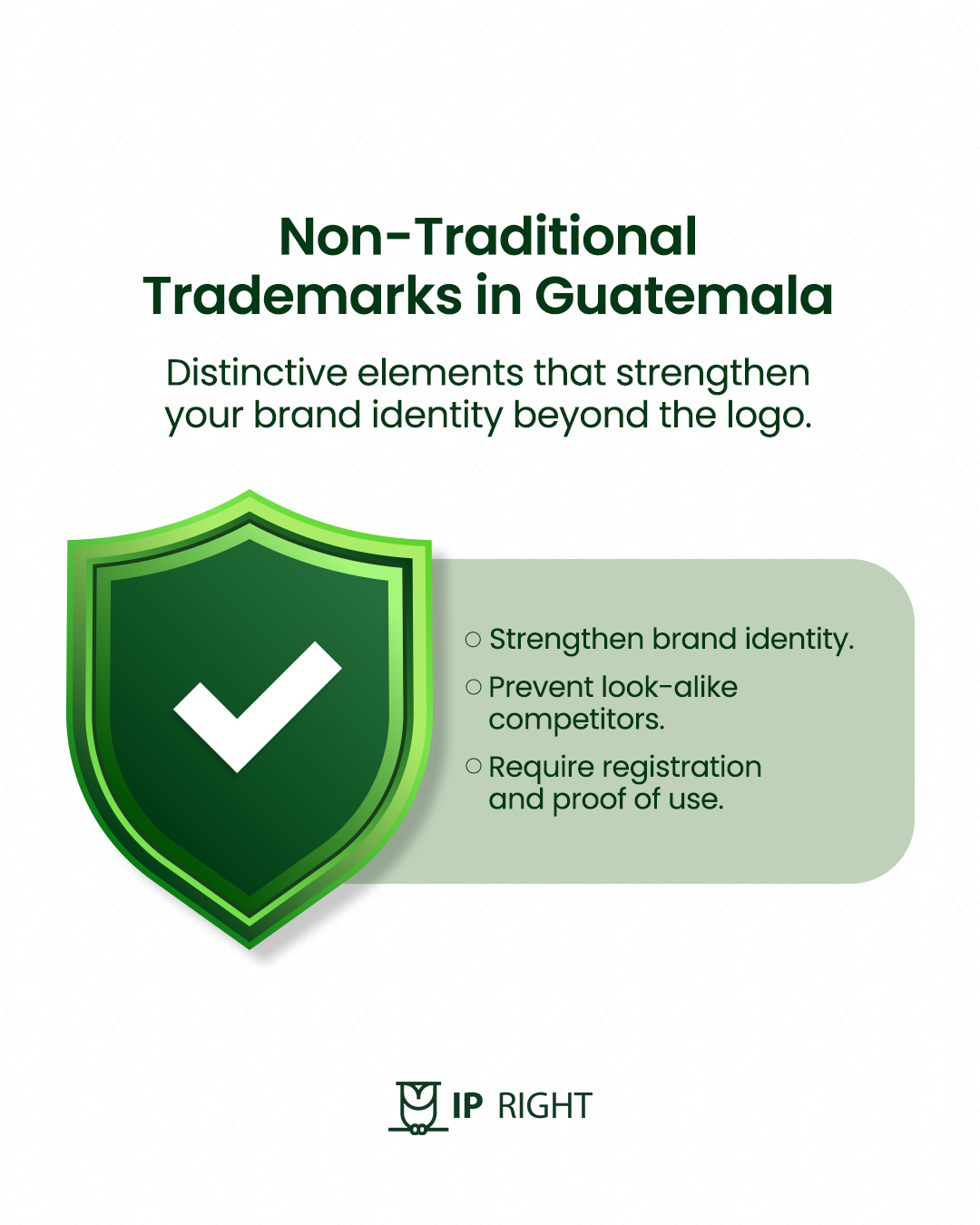
As competition grows in Guatemala and across Latin America, non-traditional trademarks are becoming an essential tool for brand protection. Companies that invest in registering and defending these marks gain stronger market positioning, clearer brand identity, and additional layers of legal protection.
At IP Right, we guide clients through the complexities of non-traditional trademark registration and enforcement, helping brands safeguard their distinctive assets while maximizing their strategic value in the marketplace.
